


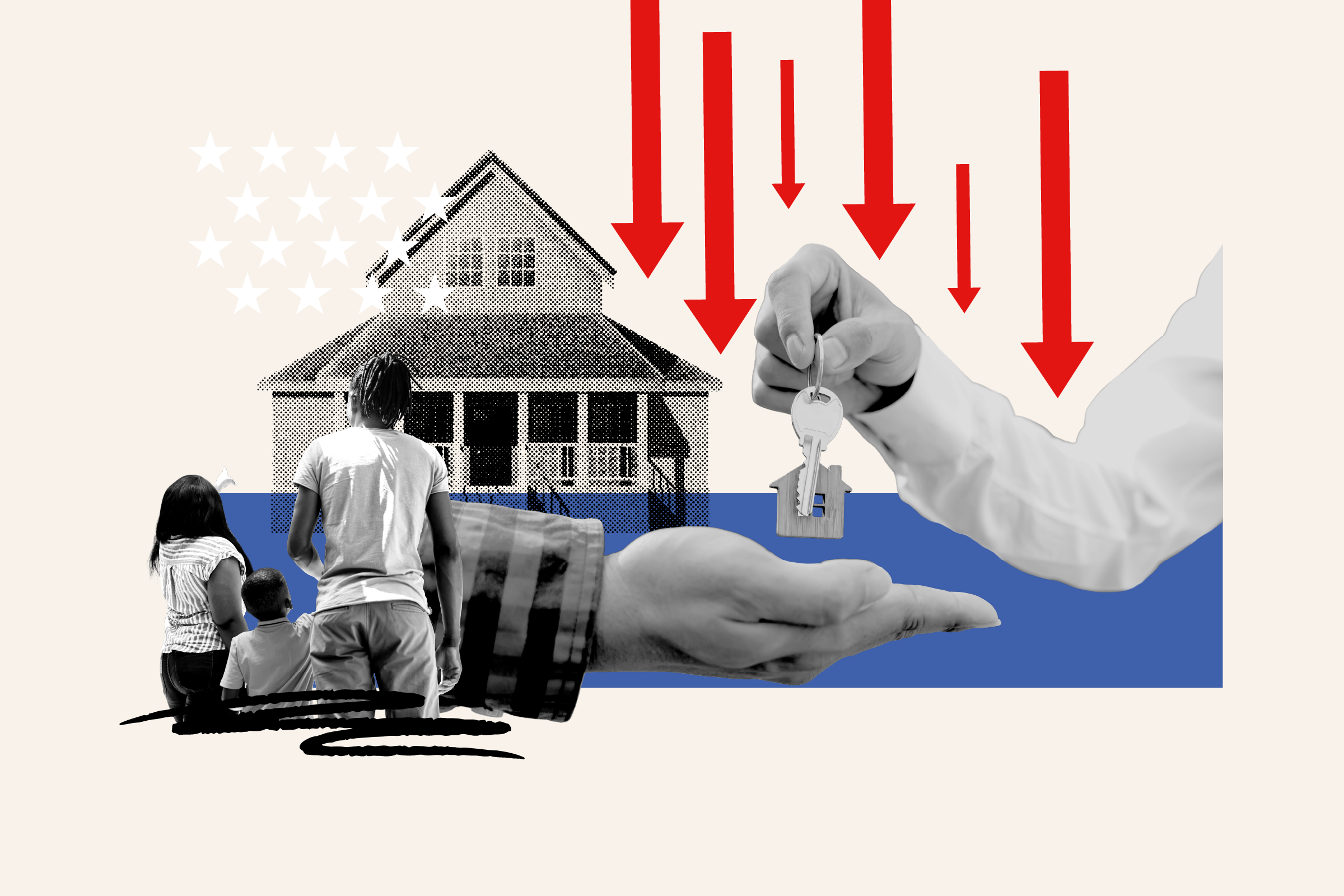
Only 28 percent of homes currently for sale across the country are affordable for the typical U.S. household, according to a new report, showing that homeownership continues moving further out of reach for Americans even as the market finally slows down.
The August 2025 Buying Power Report from Realtor.com shows that, as the maximum affordable home price for a median-income household in the U.S. has fallen to $298,000, just a little over a quarter of all homes on the market are priced within reach of the typical U.S. household.
Back in 2019, before the pandemic homebuying frenzy, the maximum affordable home price for a median-income household was nearly $30,000 higher, at $325,000.
“The buying power report puts a very tangible dollar value on the impact of today’s higher mortgage rates on housing affordability,” Danielle Hale, chief economist at Realtor.com, told Newsweek.
“It shows that even though incomes have grown in the last six years, that growth hasn’t been enough to keep up with the erosion in buying power from higher mortgage rates,” she said.
Why Are Americans Struggling To Afford Most Homes On The Market?
While buying a home has always been one of the biggest expenses an individual or a family would face in their lives, the cost of buying a home—and maintaining it—has shot up over the past five years, reaching far above what many can afford.
Historically low mortgage rates during the pandemic, combined with a new focus on the domestic space, the rise of remote work, and an emphasis on improving one’s life-work balance, led to an explosion in homebuying activity across the country between 2020 and 2022. This boom clashed with a general lack of inventory across the U.S., mainly due to the fact that developers had chronically underbuilt, compared to demand, in the years following the subprime mortgage crisis.


Prices skyrocketed amid high demand, as buyers fought each other in bidding wars to snatch the limited inventory available. Nationwide, home prices surged by 43 percent between 2019 and 2022, according to the Harvard Joint Center for Housing Studies.
Things got even worse for homebuyers after mortgage rates shot through the roof in 2022 following the Federal Reserve’s aggressive rate-hiking campaign to lower rampant inflation—and they have not improved much since then.
Mortgage rates are still lingering near the 7 percent mark; home prices are still much higher than they were before the pandemic, and about 10 times higher than they were 50 years ago; and while inventory is growing, giving buyers more options, in most of the country is still below 2019 levels.
Wages vs Home Prices
Americans’ wages have also been growing over the past five years, surging by 15.7 percent between 2019 and now, but not nearly as fast as home prices. The home price to income ratio has grown massively over the past few decades, going from 3.5 in 1985 to 5 in 2025.
“In concrete terms, a $325,000 home was affordable to the median household in 2019, but today’s median household can only afford to purchase a $298,000 home, a drop of nearly $30,000,” Hale explained.
“These calculations assume that a buyer is using a 30-year fixed rate mortgage and making a 20 percent down payment—for example, financing 80 percent of the home purchase price,” she added. “Compounding the drop in buying power, the price of homes has also risen, which means that in July just 28 percent of for-sale homes were affordable to the typical household compared to more than half (55.7 percent) of for-sale homes that would have been within reach in July 2019.”
How Are Buyers Reacting?
According to Realtor.com, buyers’ housing affordability struggles are reshaping their behavior. They are dialing up competition for the few affordable homes available in the market, renting for longer than they would have wished for, and delaying their plans to create their own family.
This is especially the case for younger, first-time homebuyers, including millennials and Gen Zers, who are having the hardest time on the market because they do not have any equity they can leverage.
Changing buyers’ behaviors also affects sellers, especially as dwindling demand leads to a pile-up of inventory on the U.S. market. As of July, there were over 1.9 million homes for sale in the country.
Sellers are increasingly being forced to slash prices to attract buyers, or delist their property as they wait for a potentially better time in the future.
In the near future, “restoring lost buying power will likely depend on a combination of modestly lower mortgage rates, stronger wage growth, and most critically, a boost in housing supply, particularly in the affordable segment,” Realtor.com wrote in the report.
“Until those conditions improve, today’s buyers will need to remain both strategic and flexible in navigating the market.”
link