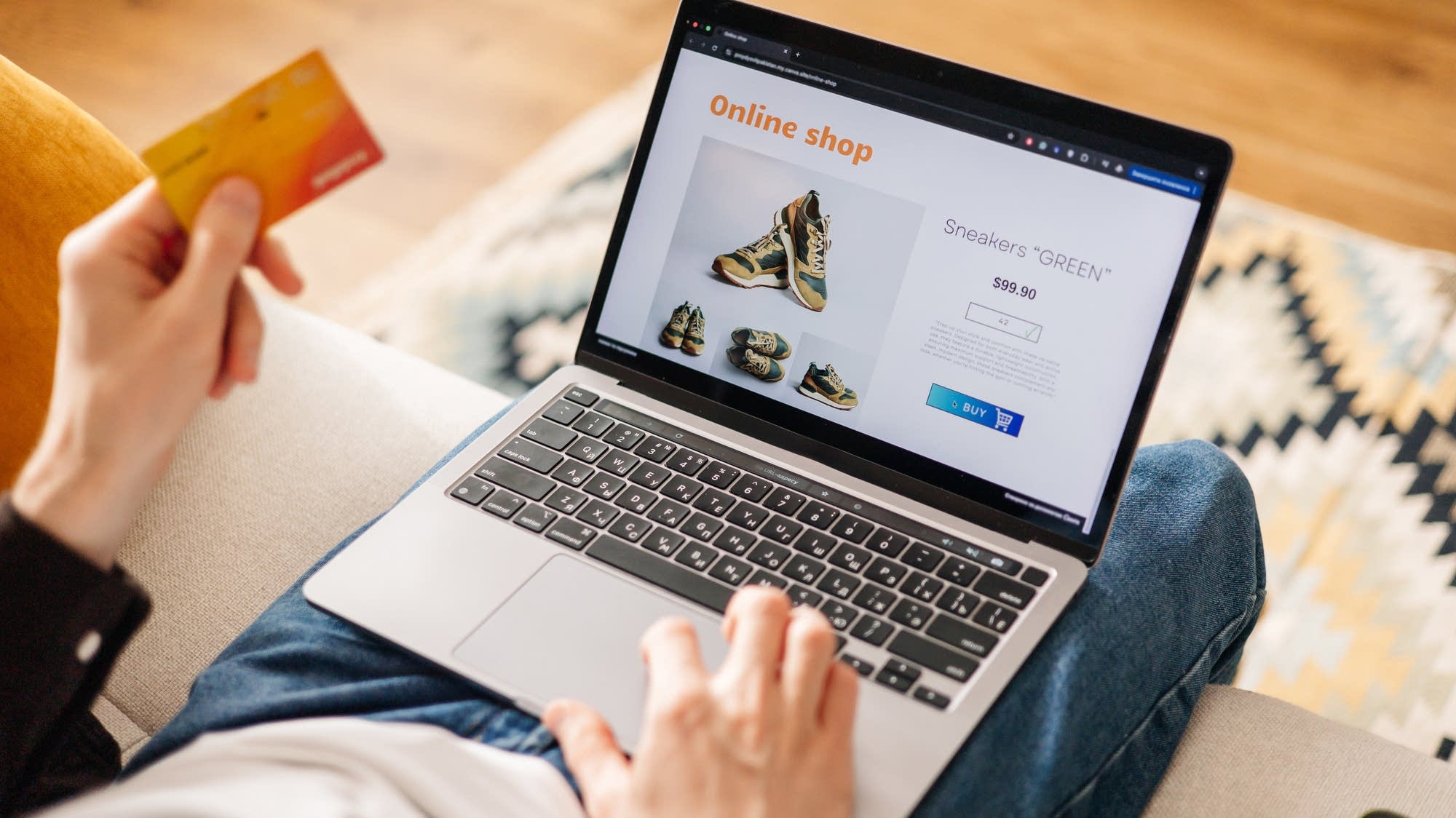
“Buy now, pay later” — BNPL for short — is booming. It’s a method of paying for goods and services over time — usually with an initial payment up-front, maybe 25% of the full purchase price, and then regular scheduled payments that get withdrawn automatically from your bank account over weeks or months.
Generally, the consumer is not charged interest on the purchase. BNPL is offered as an option by payment providers like Klarna, Affirm and Paypal, and by retailers themselves. It’s mostly used for online purchases made on mobile devices.
And BNPL transactions topped $1 billion for the first time ever on Cyber Monday, up more than 4% from last year.
BNPL is a pretty good deal for consumers. You get the goods you want right away but you’re only out a fraction of the price. You can spread the payments out for when future paychecks are coming in. There usually aren’t fees, and the debt doesn’t grow with interest.
”How does this work? The consumer is getting a zero-interest loan,” said Manju Puri, a business professor at Duke. “We know there’s supposed to be no free lunch in finance. So, someone is paying for this. Who’s paying for it and why?”
The answer: Both the retailer and the payment provider have skin in this game. Retailers pay a fee to the payment-provider on each transaction, explained Grace Broadbent at eMarketer.
“Buy now, pay later fees range between 2-8% of the sales cost. And that is compared to credit card processing fees, which are from 1.5-3.5%,” said Broadbent.
That’s a hefty bite taken out of a retailer’s profit margin. Why would they do it?
“Buy now, pay later can help them improve their conversion rates at checkout,” Broadbent said.
That means fewer consumers leave abandoned shopping carts on retailers’ websites, full of stuff they want but don’t think they can afford. If it’s only going to cost $20 now, not the full $100 maybe they can afford it after all.
Also, merchants end up selling more to each consumer on their site. And keep in mind, the retailer gets paid up front, in full, for whatever they’ve sold.
“So from the retailer’s perspective, they’re not bearing any risk, because the money is being paid by the BNPL provider. Then you have to say, well, who’s making money here? Well, on the BNPL-provider side, they’re getting a cut of fees from the retailer, so that’s a primary source of revenue,” said Ed deHaan at the Stanford Graduate School of Business. “They also get paid for things like data. They harvest an enormous amount of data on their customers. They can offer highly tailored advertising.”
The payment-providers do absorb all the credit risk — that the consumer won’t pay back the loan, and they’ll be out the money they fronted to the retailer. But, so far, said deHaan, default rates on BNPL loans haven’t been notably high.
link
About the Author