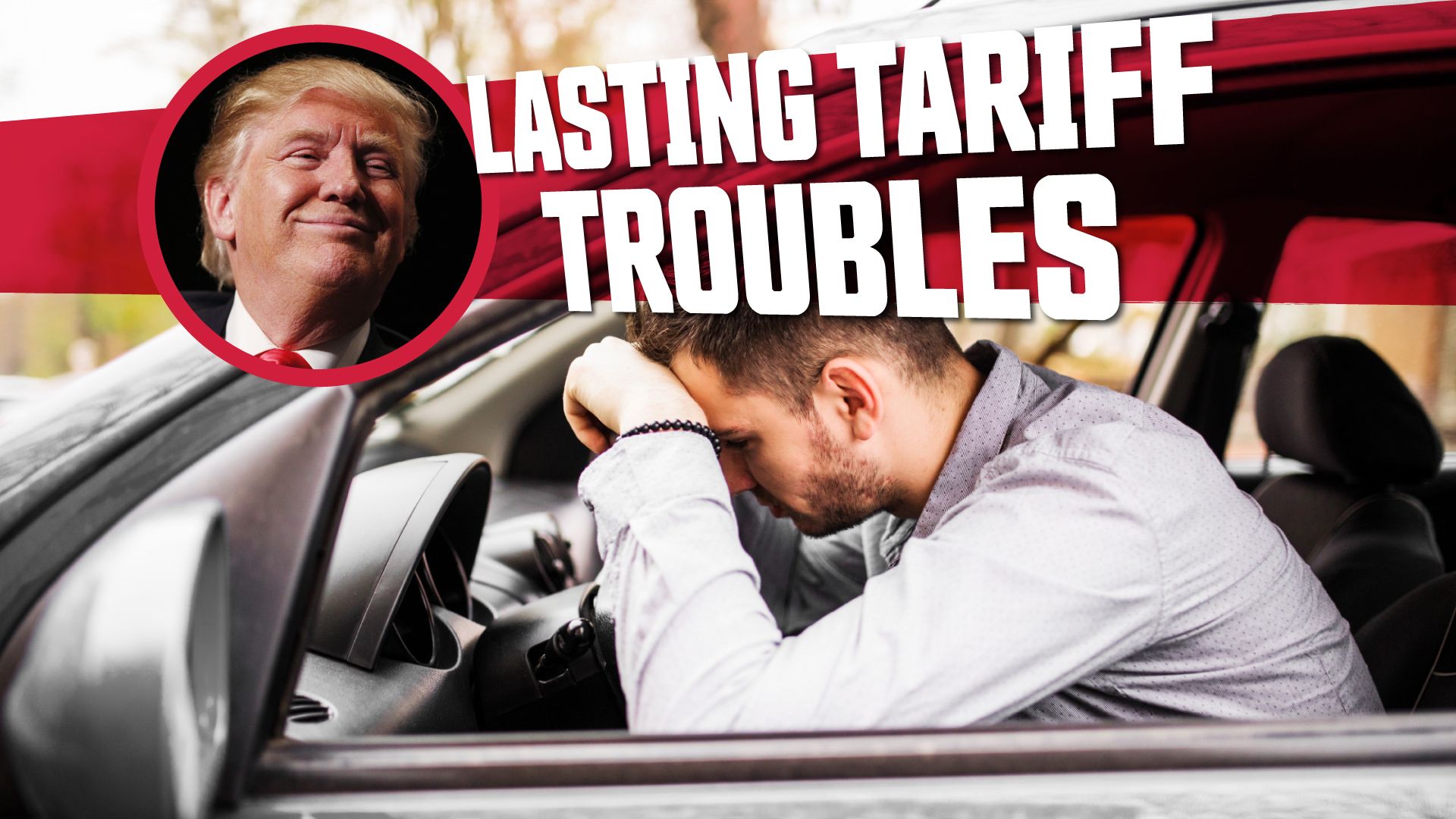
Auto importer JDMBuySell recently ran a study to determine what Americans think of these tariffs we’ve been hearing about. The study found that nearly half of the drivers in this country are prepared to stage a boycott if prices get too high, and slightly more than half of drivers are avoiding buying a new car altogether because of the tariffs. US-made cars should fare better, but even cars such as the all-American upcoming Rivian R2 has some parts coming from China, like its battery, which is likely to be subject to tariffs.

Tesla
- Founded
-
July 1, 2003
- Founder
-
Martin Eberhard, Marc Tarpenning
- Headquarters
-
Austin, Texas, USA
- Owned By
-
Publicly Traded
- Current CEO
-
Elon Musk
One detail in this study that really caught our attention: 81% of drivers are worried that it’s not just sticker prices we need to worry about, but cost of ownership, meaning refueling, repairs, insurance, and so on. Additionally, two in five drivers say that they can’t afford any increases to their cost of ownership at all. So, if we really want to break it down and crunch the numbers, how will these tariffs affect the pocketbooks of drivers whose cars are already bought and paid for?
The following is based on a study by JDMBuySell, as well as research into the automotive industry and tariffs. Any opinions offered thereupon are those of the author unless otherwise attributed.
Wait, How Do These Tariffs Work Again?
So, what exactly is going on with these tariffs? The short answer is wait and see, because it seems like we’re getting different headlines on the matter every day. The long answer would have us breaking it down country by country, sector by sector, and day by day.

Related
Chinese Parts Could Sneak Into American Cars After All
The tariff puzzle is about to change once again.
As far as what car owners in the US need to know, right now there is a 10% baseline tariff in effect on all goods imported into the US. Additionally, there are 25% sector-specific tariffs in effect for steel and aluminum, cars and auto parts, and certain portions of the mining, manufacturing, and lumber trades. Most Chinese imports will be tariffed at 30%.
The rules in effect right now should (probably) hold for the next ninety days. From that point on, we’ll have to see where the negotiations take us.
How Do These Tariffs Affect American Car Owners?
Ever heard of Summit Plastics? This is a manufacturer based in Nanjing, China that supplies instrument panel components to American automotive brands. What about NHK Spring, the Japanese company that produces suspension parts for Ford? A single General Motors pickup uses more Mitsubishi parts than you could count on both hands, from the starter motor and power steering to ECU components. These are the most American brands you could name, and they’re jam-packed with Asian parts.
Tesla is 100% American-assembled, but the parts are 69% American and Canadian. The other 31% of a Tesla comprises parts from countries like South Korea, home of L&F Co., a supplier of battery materials. Some estimates suggest that a Tesla battery alone could be as much as 40% Chinese.
Repairs Will Be More Expensive (And Insurance Along With It)
What all of this means is that, when something breaks, the official Ford, GM, or Tesla-branded replacement parts used by the dealership could be sourced from China, Japan, or Korea. In short: repairs will be more expensive, because the parts are more expensive. Whatever you’re putting away in your rainy day fund, increase it by 30%.
Some brands, like Honda and Volkswagen, are looking to increase domestic content in their American-built cars, but we haven’t exactly seen American automakers fighting to be the first to market with a 100%-American-sourced SUV or pickup, because it doesn’t make a lot of sense to spend the next three years building new manufacturing facilities in Michigan or Iowa when these tariffs will likely be gone by the time they cut the ribbon.

Related
Ford Says Tariffs Cost The Company $200 Million During Q1
The automaker will sell its Chinese-built Lincoln Nautilus from existing stockpiles until the 2026 model year changeover.
As for how all of this will affect your car insurance, Fox Business estimates that the ripple effect of higher prices on auto parts could result in an average 10% increase in auto insurance costs. Simply put, as repairs and replacements become more expensive, insurance will tend to become more expensive to keep up.
American Oil Is Mostly Drilled In America, And Energy Sources Are Exempted From Tariffs
An estimated 60% of American oil is extracted from American territory. Another 25% comes from Canada, 3% from Mexico, and 12% from overseas, according to American Fuel and Petrochemical Manufacturers.
But, none of that really matters, because energy sources are currently exempted from tariffs, so the pump will be one of the few places where we don’t feel the sting. Some analysts even predict falling gas prices, with Patrick De Haan, head petroleum analyst at GasBuddy, suggesting that Northern California could keep their prices under five bucks a gallon based on the optimism around these exceptions.
What Can We Do About Rising Ownership Costs?
You can try your best to only buy American, but if we can take a page from Jaden Smith’s book and talk about the political and economic state of the world right now, the bottom line is that it’s all hopelessly intertwined. You can buy motor oil that’s only sourced from North America and packaged in Kentucky, but the bottles were probably manufactured overseas. We’re going to be seeing higher monthly costs of ownership in a number of obvious and not-so-obvious ways, from Mexican car parts to Chinese plastics to the Australian-made aluminum can of Red Bull you picked up on your trip to the AutoZone.

Related
Honda Will Be Running In Circles To Avoid CR-V Tariffs
Honda is becoming a juggler to help keep the CR-V affordable and competitive.
So if buying 100% American isn’t really an option, what can we do as individual consumers to try and absorb the blow of these tariffs? Pretty much the same stuff we always do to try and keep our cost of ownership down:
Price increases tend to have a ripple effect. When the average MSRP of a new car goes up, for instance, demand for used cars tends to rise, and those prices go up as a result, as well. So, if freshly-imported car parts cost 10% to 30% more, sourcing from eBay and junkyards might not wind up being the workaround you think it is.

Related
What are some obvious signs you need an oil change?
Ideally, you want to change your oil before your car shows any symptoms of needing it, such as the low oil warning light illuminating. A low oil level, dirty or contaminated oil, a burning smell, exhaust smoke, or unusual noises could all be linked to your car needing an oil change.
But, preventive maintenance can mean spending an extra five or ten dollars now, so you don’t have to spend an extra hundred six months down the line. Driving less means less wear and tear on your car, and claiming discounts you didn’t know you were entitled to could more make up for the 10% extra you might be spending on car insurance.
If you were hoping there was one simple life hack that would let you dodge tariffs entirely, well, that’s just not how the economy works. All we can really do as drivers is try to keep our own expenses down, and wait this thing out.
Sources: JDMBuySell, Fox Business, GasBuddy, Energy Information Administration, American Fuel & Petroleum Manufacturers.
link
About the Author