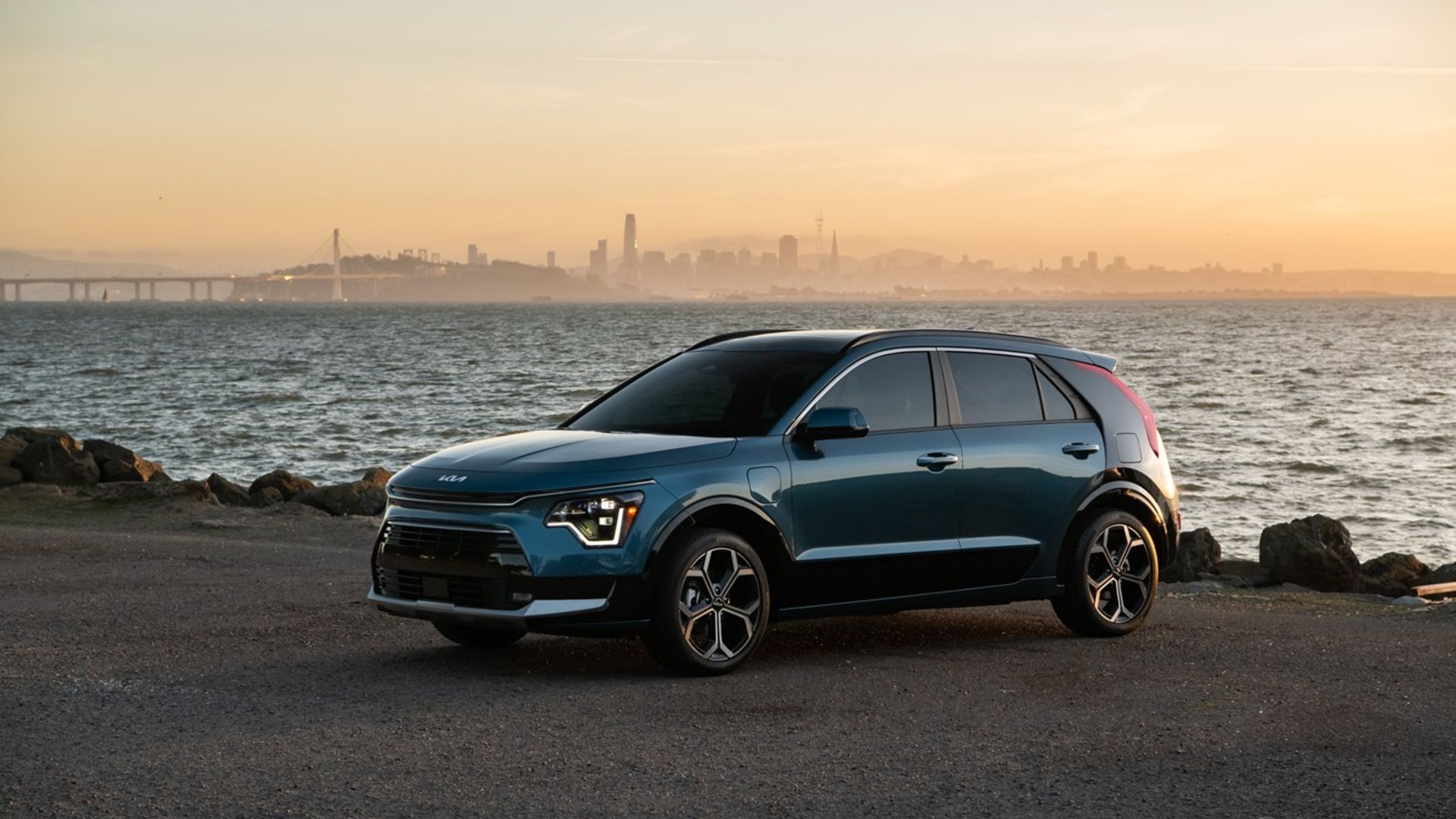
Plug-in hybrid cars and crossovers are steadily increasing in popularity in the U.S. market. 2024 saw a dramatic shift in interest from fully electric vehicles to gasoline-electric hybrid products. PHEVs sit directly as the halfway point between these two drivetrain configurations, as they combine the best of both worlds. With a plug-in hybrid electric vehicle, you get to enjoy the benefits of a fully electric drivetrain over short distances and eliminate the worry of range anxiety thanks to the added benefit of an efficient ICE. Despite a surge in interest from both consumers and manufacturers, PHEVs remain a niche proposition. They are typically substantially more expensive than their standard HEV counterparts because of the more technical electrical system and larger battery pack. This results in a very steep entry point, which is a turn-off for a lot of potential first-time buyers.


- Base Trim Engine
-
1.6L I4 Hybrid
- Base Trim Transmission
-
6-speed auto-shift manual
- Base Trim Drivetrain
-
Front-Wheel Drive
- Base Trim Horsepower
-
139 hp
- Base Trim Torque
-
195 lb-ft
Naturally, the most important reason why you would consider PHEV ownership is to cut down on your monthly spending, particularly when it comes to fuel costs. Plug-in hybrid vehicles do benefit from a comprehensive electrical system with moderately sized battery packs, but you still have to put fuel in them, especially if you plan on covering more than about 30 miles a day. While operating via the ICE, the system still gets support from the electric motor, alleviating the load from the engine and, resultantly, lowering your fuel costs. Most PHEVs benefit from great daily fuel-saving benefits, but there’s one South Korean compact crossover with a very attractive starting price and a longstanding reputation for low long-term running costs, efficiency, and reliability, making it an ideal option if it is your first time considering a vehicle that bridges the gap between ICE and EV.
To give you the most up-to-date and accurate information possible, the data used to compile this article was sourced from Kia and other authoritative sources, including the EPA, Consumer Reports, and the NHTSA.
The Niro PHEV’s Impressive Low Ownership Costs
You’ll Only Spend Around $34,000 Over Five Years
According to Edmunds, you can expect to spend $34,267 on the base Kia Niro PHEV EX trim, making it the cheapest new plug-in hybrid model that you can own in 2025. This figure includes $4,327 on insurance, $3,586 on maintenance, $524 on repairs, $1,874 on taxes, $5,190 on financing, $14,214 on depreciation, and $4,552 on electricity and fuel.
Kia Niro PHEV True Ownership Cost
iSeeCars indicates that the Niro PHEV will lose an average of $16,329 or 47.3 percent of its value over the course of five years or 60,000 miles, which is pretty much on par with the rest of the segment. It’s not as resilient as the likes of the Toyota RAV4 Plug-In Hybrid, but its lower starting price still makes it a much cheaper EV to own.
The Cheapest PHEV In 2025
One Of The Few PHEVs Cheaper Than $35,000

Kia offers the Niro PHEV in two trims. The base EX costs $34,490, while the flagship SX Touring increases the price to $40,790. Kia attaches a $1,395 destination charge to all orders. Kia has equipped the EX trim with some impressive comfort features, including:
- A pair of 10-way electrically adjustable and heated front seats with Charcoal SynTex and cloth upholstery
- Ambient lighting
- A six-speaker audio system
- A 4.3-inch touchscreen
- A wireless smartphone charger.
Optional extras for the EX include Aurora Black Pearl, Snow White Pearl, and Runaway Red premium paints for $395 and the $600 Cold Weather Package, which includes heating for the PTC, rear outward seats, and steering wheel. You’ll find yourself paying $350 for an auto-dimming rearview mirror, $150 for a cargo cover, and $345 for an interior accent lighting kit. Crossbars for the roof are an additional $410. Other accessories include $125 mudguards, $175 carpeted floor mats, and a $115 cargo tray. There’s also a $55 cargo net and $100 cargo mat.
Kia makes the SX Touring a more comprehensive setting by adding ventilation and full perforated SynTex upholstery to the front seats. You also get a seven-speaker Harman Kardon premium audio system, LED interior lighting, alloy interior trimmings and pedals, and an electronically controllable sunroof. Kia doesn’t make any additional packages available for this trim, but you can select the same accessories as the EX trim.
Up To 510 Miles Of Overall Driving Range
Low-Cost Long-Term Fuel Returns

The real reason why you’re going to consider the Niro PHEV is for its amazing fuel and energy efficiency returns. Technically speaking, this is more of a crossover than an SUV, but its consumption figures are so much more appealing that we would recommend opting for this model over a larger SUV if you are looking for the lowest cost-per-mile result. According to the EPA, you can expect the entire system to return a 48 MPG result on the combined cycle, together with a 510-mile range thanks to the 11.1-kWh battery pack and 9.8-gallon gasoline tank.
2025 Kia Niro PHEV EPA Estimates
|
Fuel+EV Consumption |
108 MPGe/31 kWh/100 Miles |
|
Fuel Consumption (Combined) |
48 MPG |
|
Range |
510 Miles (34 EV Miles) |
|
Five-Year Fuel Savings |
$4,500 |
|
Annual Fuel And Electricity Cost |
$800 |
|
Cost To Drive 25 Miles (EV/Gas) |
$1.16/$1.65 |
|
Cost To Fill The Tank |
$31 |
|
Tank Size |
9.8 Gallons |
Using electrical power only, you can expect to cover 34 miles on a single charge and benefit from a 31-kWh-per-100-miles average energy consumption estimate. The EPA also indicates that you can expect to save up to $4,250 in fuel costs over five years and spend around $800 on gasoline and electricity every year. It costs $1.16 to drive 25 miles using electricity and $1.62 to drive the ICE without any electrical assistance. These figures are much lower than any other SUV or crossover that you will come across in the new vehicle market. A full tank of gas will cost around $30.
180 Horses At Your Disposal
Don’t Expect Supercar-Rivaling Performance

The Kia Niro Plug-In Hybrid is one of the simplest and most accessible PHEV options that you can consider in the 2025 new vehicle market. Under the hood, you’ll find the Hyundai Group’s dependable naturally aspirated 1.6-liter four-cylinder engine fitted to a six-speed automatic dual-clutch transmission with a permanent-magnet synchronous motor positioned in between.
2025 Kia Niro PHEV Performance Specifications
| Powertrain | 1.6-liter Four-Cylinder And One Permanent-Magnet Motor |
| Horsepower | 180 HP @ 5,700 RPM |
| Torque | 195 LB-FT @ 4,000 RPM |
| Transmission | Six-Speed Dual-Clutch Automatic |
| Battery | 11.1 kWh |
| Range | 510 Miles (33 EV Miles) |
| Fuel Economy | 108 MPGe |
| 0-60 MPH | 7.3 Seconds |
| Top Speed | 100 MPH |
The system produces a combined 180 horsepower and 195 pound-feet exclusively to the front wheels. The result is a 7.3-second 0-60 MPH acceleration time and 100 MPH top speed. The motor generates 83 horsepower and 149 pound-feet when operating independently. There’s also a hybrid starter generator located within the transmission, which churns out a modest 11 horsepower and 26 pound-feet. The ICE produces 104 horsepower and 106 pound-feet without any electrical assistance.
|
Strengths |
Weaknesses |
|
|
The Niro PHEV Costs $4.66 To Recharge
The Compact Battery Bolsters Low Running Costs

According to the U.S. Bureau of Labor Statistics, the national cost of electricity currently sits at around 17 cents per kWh. St. Louis and Seattle benefit from the lowest energy costs, at roughly 13 cents per kWh. San Diego and San Francisco are where things get a bit costly, where energy can run you up to 42 cents for every kWh. These rates are slightly lower during off-peak hours, which are typically between 11 PM and 6 AM when most people charge.
Kia Niro PHEV Charging Costs
| Battery | 11.1 kWh |
| Low Rate States | $1.44 |
| High Rate States | $4.66 |
| National Average | $11.02 |
The Kia Niro PHEV’s smaller battery means that you won’t be spending a lot of money to recover the required amount of energy, regardless of where you reside. In low-rate states, the 11.1-kWh battery costs just $1.44 to recharge, while more expensive cities will return a higher but still competitive $4.66 fee. On average, you can expect to be paying $1.88 across the country. The fully electric model costs $8.42 in cheaper regions and $27.22 in cities with the highest energy costs. The national average charging cost of its battery sits at $11.02.
link
About the Author